
Dr. Peter Venkman (![[personal profile]](https://www.dreamwidth.org/img/silk/identity/user.png) neverstudied) wrote1997-11-09 12:41 am
neverstudied) wrote1997-11-09 12:41 am
neverstudied) wrote1997-11-09 12:41 am


Entry tags:
APP
IN CHARACTER
Character Name: Dr. Peter Venkman
Canon: The Real Ghostbusters
Canon Point: post-"Hole in the Wall Gang", IE very end of season 2.
In-Game Tattoo Placement: across his lower stomach
Current Health/Status: Alive and kicking.
Age: 36
Species: Human
Content Warnings: Parental death and neglect, death and spirits as handled by an 80s cartoon primarily aimed at children. Additionally, Venkman in the original Ghostbusters movie is a creep when it comes to his interactions with women, including his own students at Columbia University. However, the cartoon is very explicitly another timeline (implied in the cartoon and explored in detail in the modern IDW comics), with the movie being a fictional portrayal of real events in-universe, and it is explicitly mentioned in-universe that the Ghostbusters had basically no creative control over the handling of the movie. Additionally, the events in the movie are part of their own multiverse timeline, and the two Venkmans not only meet, but absolutely despise each other. I make note of all this here to clarify that this Venkman is different from the film Venkman, as a general warning for that aspect of the canon as a whole, and because comparisons between the Venkmans will be discussed in the personality section to emphasize certain details of what (this) Venkman is like.
History: https://ghostbusters.fandom.com/wiki/Peter_Venkman/Animated History includes some details for later seasons which do not apply to this Venkman and are debatably canonical (EX: Near-universally disliked by the cast and crew, all modern RGB comics seem to ignore the characterizations of these later seasons, etc).
https://ghostbusters.fandom.com/wiki/Ghostbusters#Plot_Synopsis General history of the first film- while, again, the cartoon heavily implies that aspects of the film are fictional, the majority of events did occur. The events of the second film happen sometime after this Venkman's canonpoint, and are therefore excluded.
https://ghostbusters.fandom.com/wiki/Ghostbusters:_The_Supernatural_Spectacular the novelization of the first film, written by Richard Mueller. Significant for extraneous information provided as background information for characters [EX: Venkman was born in a circus tent and raised at a carny] and the fact that the author went on to write multiple episodes of the cartoon, most of which involved fleshing out details of the characters' pasts or family lives- making details such as Venkman being a carny kid in the novelization more plausibly canonical.
https://ghostbusters.fandom.com/wiki/NOW_Comics-_The_Real_Ghostbusters_Series Tie-in comics marketed for kids. Canonicity is debatable. For example, I have my doubts that in RGB's universe, sentient talking technologically-advanced dinosaurs live in the earth's core. But other details I do tentatively take as canon, such as Venkman's date with a transformed werewolf woman.
Personality: Lorenzo Music was a wonderful man with a wonderful voice, best known for playing Garfield. He took a soulless cat cartoon who is currently known predominantly for being merchandise as Jim Davis continues to sell out more and more; and Lorenzo Music single-handedly gave that cat a heart. A soul. He made something joyous out of that cat.
You could argue that he did something similar for his second-most famous role, Dr. Peter Venkman.
Real Ghostbusters' Venkman is oftentimes best described with comparisons, particularly to his original, Bill Murray counterpart. The original movie is about a trio of idiot scientists(and their friend/co-worker who doesn't have a PhD but has way more common sense than the three of them combined) who manage to save the world from some weird dogs, demons, and a giant marshmallow man. Venkman is our protagonist/"hero"/POV character who says some one-liners, gets slimed, and is portrayed by Bill Murray. He lusts after his students during scientific studies, he refuses to take no for an answer and has to be bodily shoved out of a woman's apartment while professing his love to her, and he briefly considers sleeping with a possessed woman. That's Venkman in the movies.
In an episode of The Real Ghostbusters("Take Two"), Venkman watches said movie, based off of his real experiences, and said "He doesn't look a thing like me." And he's goddamned right. Looks aren't the only difference, either. Real Ghostbusters' Venkman is more mellowed out; his insults have less bite to them and it's a lot easier to find the loyal heart under his prickly exterior. He's still full to the brim with one-liners and faux-suaveness, still lazier than the rest of the team, and still an idiot half the time, but he also has the voice of Garfield now. Which is the most important change, clearly.
... That's not entirely a joke. Lorenzo Music's portrayal of Venkman is what makes this character great- oftentimes, when people talk glowingly about Peter Venkman in the 1984 movie and excuse the shitty things Bill Murray's Venkman does, they point towards Lorenzo Music's Venkman for reasons why he's a good man. But they're different characters- they both exist simultaneously in different universes, as confirmed in the comics when they actually meet [and try to punch each other, disgusted with their counterpart].
While this Venkman is still more than willing to flirt with a beautiful woman(or a man, honestly, given the number of times he refers to other men with affectionate nicknames ranging from "baby" to "bubala", among other things), he's more respectful and knows when to back off; unlike Prime/Bill Murray's Venkman, who doesn't know when to take no for an answer unless the woman is literally possessed by a demon, apparently. RGB's Venkman is willing to roll up his tuxedo sleeves and get in a physical brawl with a man at a party because the man in question is yelling at and hurting his girlfriend, a woman Venkman has never even spoken to before("The Headless Motorcyclist"). In "Devil to Pay", he's genuinely horrified at the insinuation that he'd spy on Janine in the shower. Are both of these things just examples of basic human decency? Yep. Are they a vast improvement over Bill Murray's portrayal of the character? Oh, absolutely.
An important aspect of Venkman, touched upon in the films but amplified in the cartoon (and the novelization), is the fact that he's a conman, and a damned good one at times. His father has never made an honest dime in his life, and while Venkman's not a huge fan of his dad, it definitely rubbed off on him. Venkman knows how to talk himself out of a bad situation, and he uses that skill liberally. It's not infallible, but it can buy him and his partners some time to set up the ghost traps or ready the proton beams. He's also not afraid to twist some arms or blackmail someone for "the greater good", which is usually defined as keeping him and his partners out of debt and/or jail ("The Spirit of Aunt Lois", "The Devil to Pay", "Doctor, Doctor", etc).
His conman abilities are also partially related to his background in psychology, as well as his childhood growing up on a carny. He's good at reading people, and he's good at figuring out why they act the way they do. This comes in handy in many episodes, where he successfully helps handle a ghost or spirit by helping convince them to disperse ("Last Train to Oblivion", "Dairy Farm").
Interestingly enough, despite the above, most of the times Venkman has run-ins with the law he's actually entirely(or mostly) blameless. Three episodes in particular deal with Venkman (and sometimes the rest of the 'busters) getting arrested or otherwise profiled by cops: "The Headless Motorcyclist", "The Scaring of the Green", and "The Revenge of Murray the Mantis". Headless Motorcyclist is a particularly egregious example of this: in the episode, Venkman is falsely accused of attempted murder by a cop who spends most of the episode inviting himself into the Ghostbuster's home, taunting Venkman, and putting together circumstantial evidence to build a case. All this, combined with the false accusations and inprisonment in the film, Venkman's often less-than-legal methods of getting results, and his father's frequent run-ins with the law, suggest one thing in particular: Venkman doesn't get along well with the police.
On a related note to his conning, he's more than willing to charge an arm and a leg for his team's ghostbusting services, even if it wildly inconveniences the clients. He's the business-minded one of the team, through and through. In "You Can't Take it With You", he's the first one to dive on the money raining from the sky at the end of the episode, and the only reason he doesn't take it is because his partners refuse to take any of it themselves. (On a related note to THAT, he often prioritizes his partner's thoughts on a situation above all else, and is also shown to care more about them than things like fame and fortune- in the episode "Banshee Bake a Cherry Pie", at the very end, Venkman is cheered at by an adoring crowd and is offered fame and stardom by a music dealer. Venkman immediately turns his back on this, despite multiple other episodes emphasizing how much Venkman adores the spotlight["Mr. Sandman, Dream Me a Dream", "Ghostbuster of the Year", "The Devil in the Deep", etc], because he doesn't want to give up ghostbusting with the boys.)
There are times when he's willing to cut clients some slack- in "The Boogieman Cometh", when two children attempting to hire the Ghostbusters can't afford the actual fee of several hundred dollars and instead offer all the money in their piggy bank, he accepts it without complaint. Which, you know, is basic human decency to not turn away little kids because they can't cough up a few hundred bucks, but such a thing is worth noting with a character like Venkman. In "The Thing in Mrs. Faversham's Attic", he waves the fee entirely for an elderly woman who needs their help, simply because she reminds him of his deceased mother. At the end of the episode, he chooses to stay behind and have tea with her instead of going on a bust, citing how much he wishes he'd taken more time to do things like this with his own mother. He has his moments of being a genuinely good guy, particularly with his teammates.
One major example comes in "The Devil in the Deep", when the other three are swallowed whole by the sea god Nexa. Venkman works his ass off to develop a weapon that can actually defeat this primordial god, despite his very limited knowledge of mechanical engineering and how their weapons actually work. The weapon eventually backfires, but it does its job and helps save the day as Venkman intimidates the god and convinces him to swim off back to the depths of the ocean and never return. Interestingly, this episode is also the only time Venkman is ever shown to cry, though it's only one tear. The episode is sadly one of the ones with a poor animation quality and budget, so he's not able to show much emotion to his friends being eaten beyond ":(", but that alone counts for something.
Rarely showing how upset he is even under circumstances like the above isn't even one of Venkman's worst problems. On the one hand, there are times when he genuinely seems to think he's basically god's gift to mankind, and parades himself around as such, all the way until someone brings him down a few pegs. But as stated in an interview with J. Michael Straczynski/JMS- the head story editor for all episodes from seasons 1-2, writer of 21 episodes, arguably the most important voice of what's canon when it comes to the stories and characterizations of this show:
//"Peter Venkman was probably the hardest character to write. Because he was the comedic voice. And he had to make the jokes. And... to really make that character funny, is hard. There's also- as I understood him, at least- there's sort of a... Anger, inside of Peter, there's something that's not connecting, inside of him. He has issues. Issues- he's a five volume set, we'll consider that the introduction. And... he's a cynic. And to me, that was important to bring out, in the Christmas episode, in others, he's the one that doesn't go for the "okey-dokey", Ray and Egon're happy to believe in the goodness of mankind, Peter... he's a little more reserved. He's waiting for someone to disappoint him. And... that made him a challenge, to make that funny. To make depression funny. Uh, so it was a real challenge- of all the characters that were there, he was the hardest one for me to write, and that made him the most fun, though, 'cause you want a challenge, as a writer, you want to say "how far can I push this?" And keep this character laconic, annoyed, depressed, cynical- but lovable. That's the hard part."//
It's easier to see the anger- he's ready to take a desk lamp to the faces of all the "happy motorists" in the world after his new car breaks down, and has to be physically restrained before he does so("Don't Forget the Motor City"). He gets in physical alterations in multiple episodes, sometimes even threatening to do so with his partners- Ray's happy-go-lucky attitude in "Dairy Farm" when Ecto-1 gets totaled makes Venkman consider strangling him. He's well known for threatening to kill Slimer a second time, blast him with the proton wand, or shove him in the containment unit for good; many episodes involve him chasing the little spud around the firehouse in an attempt to make good on those threats.
The depression is a little more subtle. As put by JMS in the above, he's always waiting to be disappointed again- expecting the other shoe to drop. One of the episodes that displays this is "A Fright at the Opera", wherein a famous opera singer appears to be taken with Venkman and is absolutely enthralled by him- until the man she really likes quits, at which point she reveals she was only using Venkman to make the other man jealous. She publicly humiliates him and throws her out of her dressing room, commenting on how she would never have fallen for a man like him. Venkman tries to save face, arguing that he definitely knew that was her plan all along. (He did not.) This is immediately followed by him getting kidnapped by Valkyries and doesn't have much payoff, but this episode is a bit of a mess, so that's to be expected.
One can reasonably assume that Venkman's biggest fear is to lose the rest of the Ghostbusters- to be left alone with that unchecked depression and without anyone to reign in his anger, to have all the responsibilities of being a Ghostbuster on his shoulders without any of the technical know-how to handle it. He's certainly not that affected by the horrible monsters he sees every day as a Ghostbuster- while some do strike fear in him, and he does generally have a good sense of self preservation, he is far more likely to make an offhanded quip and raise his weapon than cower in fear.
It's implied in various sources that Ray, Egon, and Venkman had been friends since they were students at university, and that over the years Ray and Egon were fired from/kicked out of different universities (including one memorable event wherein they were kicked out for attempted necromancy). Taking both these into account, one can assume that Venkman, despite not being involved with the aforementioned necromancy and probably uninvolved in other, similar incidents, followed the two along to whatever university they went to next. He didn't have to, but he stuck by them anyway. This is corroborated within the aforementioned "The Devil in the Deep" as well as "Egon's Ghost", wherein Venkman, Winston, and Ray all decide that they'd rather be trapped in the netherworld forever than live a life without Egon- and design a way to go into the netherworld to rescue Egon that will permanently trap them there if they don't find him in time to bring him home. Yes, this is an example of all the Ghostbuster's ride-or-die attitudes, but it's nonetheless relevant for Venkman's mindset. He puts them all first, above his own safety. And it would kill him to lose them.
Additionally, as briefly touched upon earlier, Venkman appears deeply troubled by the death of his mother. No real details are ever given as to how she died or exactly when, but Venkman does seem to show a lot of guilt over not being there for her enough, particularly in the aforementioned "The Thing in Mrs. Faversham's Attic". His decision at the end of the episode to stay with Mrs. Faversham and have a cup of tea with her is partially out of concern for leaving her alone, and partially because it gives him a tiny bit of closure for the fact that he never got to do something similar with his mom. As for his father, the senior Venkman is noted to have been distant throughout his son's childhood, not present during holidays, somewhat neglectful, and often forcing the family to uproot due to his conman schemes falling through and putting him in hot water ("Xmas Marks the Spot", "Venkman's Ghost Repellers", etc). Venkman's father is also not above using his son's fame to his advantage or outright lying to and conning his own son for material gain ("Venkman's Ghost Repellers" again, "Cold Cash and Hot Water"). This leads to their relationship being strained and estranged, and Venkman is often frustrated with his father at best- deeply hurt by his actions at worst. His relationship with his family does weigh on him, even if he's reluctant to admit it.
In the end, Venkman is a sarcastic, lazy, and depressed man with anger issues who probably shouldn't have access to an unlicensed nuclear accelerator. He's also very loyal and protective of the ones he cares for, has two PhDs, and is more than capable of using that nuke to its full potential.
Also he stood up while riding on a roller coaster in order to to shoot Cthulhu in the face.
Abilities/Powers/Weaknesses & Warping: He can predict when a phone is about to ring. I'm not even joking. No one's sure if this was an intended implication or just multiple episodes having a weird audio error with a delayed phone ring, but I think it's hilarious so I consider it canon.
May also have latent precognitive abilities- in the Sandman episode, he dreams of the Sandman long before they encounter him. This is never brought up again. Again, I think it's hilarious for him to just have completely useless powers like phone ring prediction and "can maybe dream about something a couple hours before it happens, but get absolutely no important information from it"; though I'm willing to discard one or both if you feel there's not enough canon basis.
Inventory:
-Proton Pack
-Model Train Set (in box)
-Paperback copy of Dewey Lamort's "Across the Lonesome Hills"
-Deck of cards
-Casual outfit
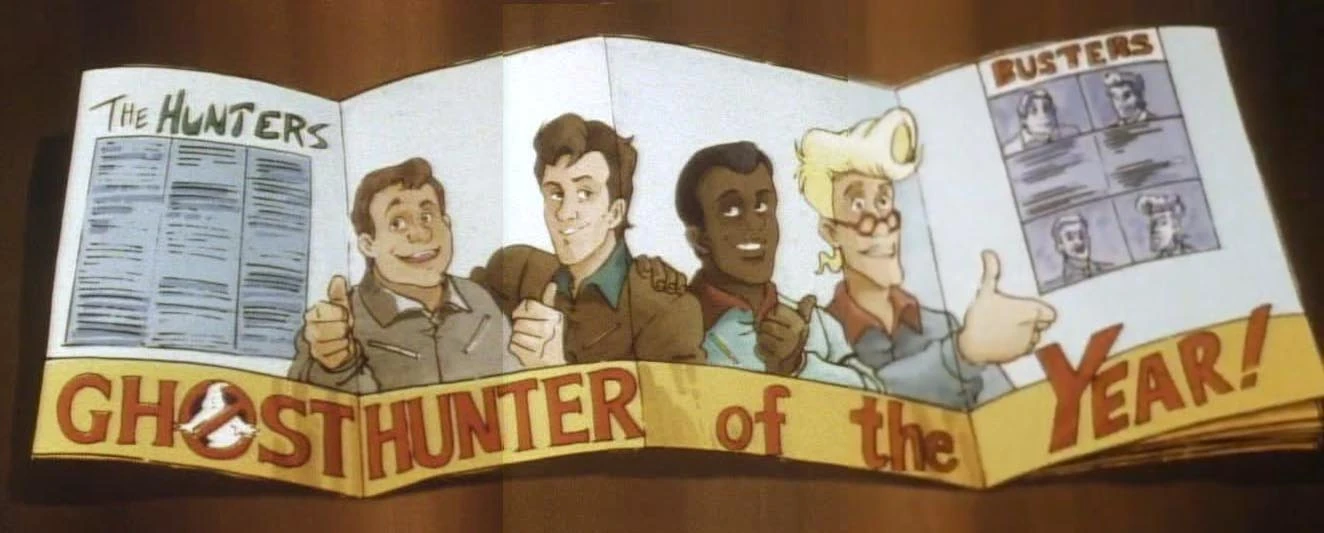
-This copy of Spooks Illustrated.
Writing Samples:
(CW: brief cannibalism joke, blood, gore, death, fire) here
(CW: heavily implications of issues with consent in relationships) here
OUT OF CHARACTER
Player Name: Nick
Player Age: 22
Player Contact:
Other Characters In Game: N/A
In-Game Tag If Accepted: Peter Venkman: Nick
Permissions for Character: here!
Are you comfortable with prominent elements of fourth-walling?: A good chunk of the characters I play or have played are Muppets. I absolutely love 4th-walling and accept it whenever and however it may come.
What themes of horror/psychological thrillers do you enjoy the most?: Hard to narrow it down, but I find that most of my favorites involve a slow-burn building of tension and atmosphere, the recognition that something is slightly off but not knowing why, the sense of dawning horror as character's realize the danger they're in... I love a good psychological horror and I love ambiguity. Also good practical effects in film and good creature design in general are (chef kiss)
Is there anything in particular you absolutely need specific content warnings for?: Nazism, antisemitism, underage sex/child sexual abuse (less so in a "character discussing past abuse" sense and more of an "actively being threaded out" sense).
Additional Information:

JANUARY/FEBRUARY 2020- TITANIC EVENT
Lorenzo is the future heir to a fortune from his businessman father, Jonathan Fink. People with amnesiac characters can handwave their characters recognizing his father's name and status if they would like. Additionally, passengers (particularly NPCs, but player characters as well, especially those in first class) may have heard rumors of exactly how the elder Fink earned his fortune; it's generally believed that his money was earned through less than savory methods, chief among them blackmail. It's also wildly believed that the death of Lorenzo's mother was his father's fault. How much of this is true? Well, you can't believe everything the rumor mill tells you... But there's often a grain of truth in a lie.
That said, it is true that Lorenzo wasn't born into wealth, and in fact his family languished in poverty until his teenage years. Around the time Lorenzo turned 14, his father somehow came into enough money to begin investing, then enough to start his own businesses, then enough to make a name for himself. Since then, all public appearances of Lorenzo seem to hint that he's absolutely enjoying the most of his fortune and moderate fame. In recent years, his father has made a massive push for his son to take more of a role in business matters in the various companies his father runs, something Lorenzo appears reluctant to follow through with.
Lorenzo is generally described as charismatic- or at least, he tries to be. While he inherited his father's gifts of smooth-talking, there's often an undercurrent of tension in the way he holds himself, like he's always waiting for the other shoe to drop. Oddly, he seems particularly on edge on this trip...
Days 1-5: Generally, Venkman is himself, with only faint deviations. By the fifth day, he's starting to grow paranoid, particularly around members of the first class- nervous about rumors and tabloids, afraid of judgement, and deeply concerned about what other people think of him, to an obsessive and excessive degree. There's another fear nagging at him too, one he can't place- something vague but overwhelming, based on a false memory he can't recall. For the most part, he's still able to overcome these feelings and act like his normal self. He's also beginning to watch the water, but he rarely notices the shapes in the ocean.
Days 6-10: It's harder to fight back the paranoia. Still mostly himself, but more skittish. He can recall the basics of all important memories, but the details are starting to get muddy. The only exception to this are memories related to water, particularly past busts involving water spirits and monsters (particularly the case involving Nexa)- but he can only manage total recall of these while watching the water and the shapes within, which he can see far more clearly now. Beginning to hallucinate that the Titanic has the appearance of a long-abandoned shipwreck. Starting to gain memories from his false self, but they're vague and blurry. Least affected by the paranoia effects when he's in his own cabin, and is able to act mostly normal in network conversations.
Days 11-20: He's getting bad, turning into a nervous wreck no matter where he is. More memories from his false self are pouring in, and he doesn't like what they seem to imply. He's losing track of important memories from his real life- the faces and voices of important people, the specifics of his mother's death, etc. Starting to go through periods ranging from thirty minutes to several hours where he completely believes he's Lorenzo Fink- only to snap back out of it with hazy recollections of what happened. Confusing false memories for real ones, EX: getting memories of his real father mixed up with memories of Lorenzo's. The ship almost always looks like a waterlogged mess because he's spending so much time watching the water, trying to cling to the few memories he's able to keep clear.
Days 21-25: Can no longer remember the names of most people from home, let alone specific details of memories. Various cases involving the ocean can still be partially recalled, but the people involved are like strangers. He's going by Lorenzo most of the time now, but he can still be snapped out of it for very short periods of time. Nowhere is safe, not even his own room, and he no longer uses the network. He's a paranoid shell of himself.
Days 26-31: He's totally, 100% Lorenzo Fink... With three major exceptions. One, he still remembers the Nexa incident, and ONLY the Nexa incident. However, he mostly considers it a dream. A very vivid dream, at that. He can't even remember the people who were involved. Two, there's something about Ray that he keeps being drawn to. Three, once the ship begins to sink, it's like a switch flips in his head. Something about the danger and adrenaline seems to wake the real Venkman back up ever so slightly. He'll still thoroughly believe he's Lorenzo Fink, but it's like he's on autopilot, physically fighting back against the Grindylows and trying (and likely failing) to take on the Sharktopus like he's done this sort of thing before. Panicking can wait until they're somewhere safe. The longer this hellish night goes on, the more Venkman acts like himself, and the more his memories re-scramble, especially when he interacts with people who know who he actually is. It's possible that before they even reach the lighthouses, he'll be (mostly) back to himself! But if not:
(specifics/dates subject to change)
Days 1-5?: The beginning of the end of the reign of Lorenzo Fink. We knew ye well. Upon arriving to Rapture, memories will start dredging themselves back up again, much like debris washed ashore from the tides. This is another confusing transition period but the good news is that, at least in this case: it's easier to remember who you are than it is to lose yourself entirely.
Days 6-10?: Guess who's back! Uh, mostly. Venkman's brain is still pretty scrambled, but without the oppressive classism on the Titanic to concern himself with, his paranoia is ebbing away. By around the midpoint of the month he should be himself, with only the occasional twinge of paranoid fear from a man who never existed.